How Does Boudoir Posing Work? You Don't Need to Know How to Pose
One of the things I hear most often from women considering a boudoir session is some version of, “I have no idea how to pose.”
That's completely okay. You're not supposed to.
Most of the women I photograph aren't models, and I don't expect anyone to walk into my studio knowing where to put her hands, how to position her legs or which direction to turn her chin. Guiding you through those details is part of my job as your photographer.
Boudoir posing isn't about memorizing poses before your session. It's about using posing, lighting and camera angles together to create photographs that look beautiful while still looking like you.
I Guide You Through the Entire Pose
When I ask a client to move into a pose, I don't simply tell her where to stand or sit and expect her to figure out the rest.
We work through the details.
Where your hands are placed, the position of your legs, the angle of your chin and the direction you're looking can all change the way a photograph looks. Sometimes a very small adjustment is all it takes to completely change an image.
I have a long list of poses I've used throughout my years of photographing women, including several client favorites that are consistently big hits. But those poses are a starting point—not a formula that has to look exactly the same on every woman.
Sometimes I Get Into the Pose Myself
There are some poses that are much easier to show than explain.
If I'm trying to describe a particular position and I can tell that words aren't quite getting us there, I'll often get into the pose myself and demonstrate exactly what I mean.
You can see where I'm placing my hands, how I'm positioning my legs and what I'm doing with my body instead of trying to interpret a string of instructions.
And sometimes I'll warn you ahead of time: this may feel a little strange.
A pose can feel completely different from the way it photographs. Something that feels slightly exaggerated or unusual while you're doing it can look beautiful through the camera.
You don't have to figure out whether you're doing it correctly. I'll guide you through it.
One Pose Can Create Several Different Photographs
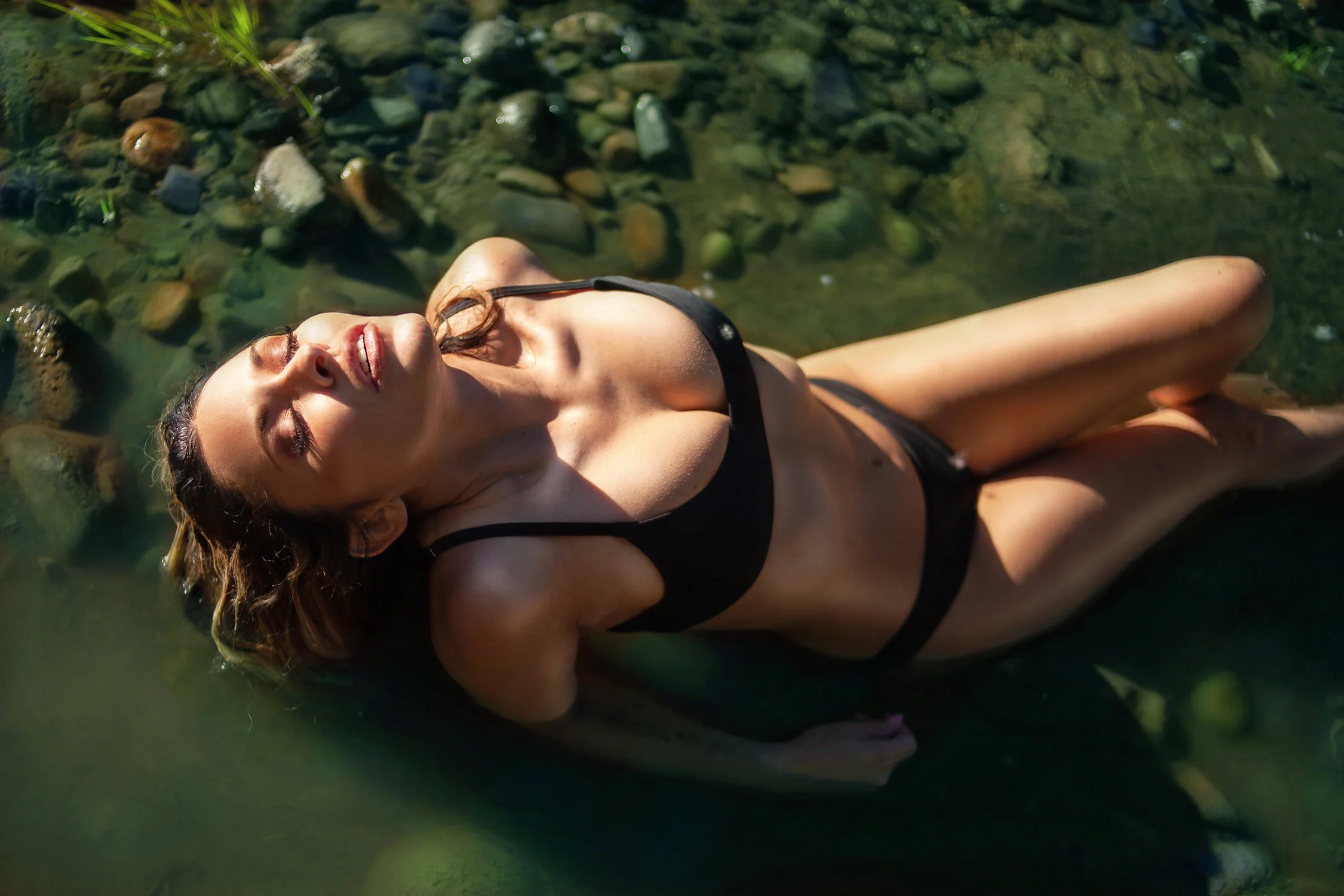
Posing isn't just about the position of your body.
I can photograph the same pose from a variety of angles and create images that feel completely different from one another. I may change my own position, photograph from higher or lower, move closer, pull back or concentrate on a particular detail.
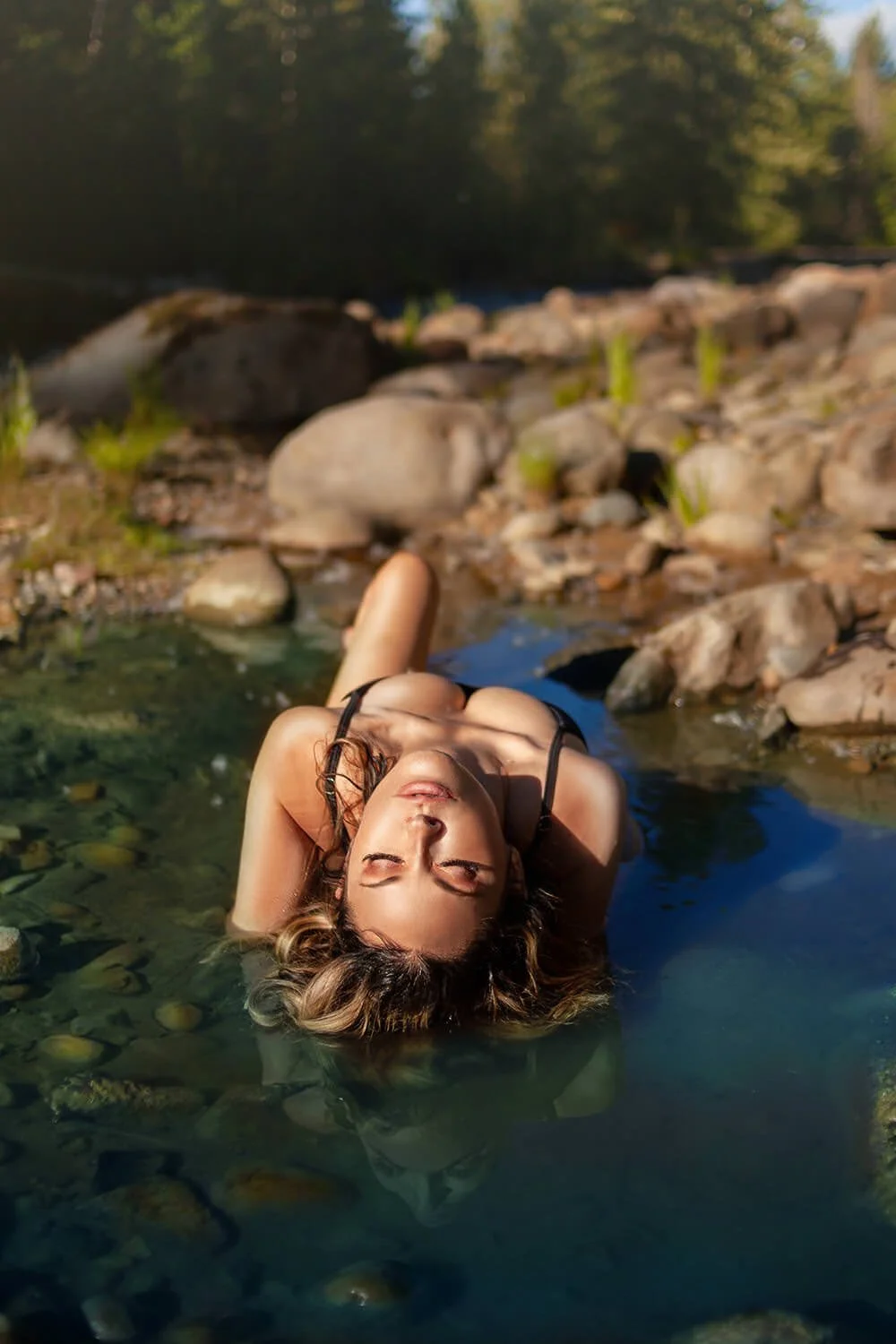
Lighting and camera angle also affect what we see in the final photograph.
That's one reason I don't believe there is a single “perfect boudoir pose” that works exactly the same way for every person. Part of photographing a client is paying attention to what works for her rather than simply moving through a predetermined list.
If you're worried that you aren't naturally photogenic, I talk more about that in I'm Not Photogenic—Can I Still Do a Boudoir Photoshoot?
I Show You the Back of My Camera as We Go
One of the things I like to do throughout a session is show my client the back of my camera.
It gives you a chance to see what I'm seeing, but it also gives me valuable information.
I can start to get a feel for which photographs you immediately respond to, what you love about yourself in certain images and whether there are angles or looks you prefer over others.
That helps me continue to shape the session as we go.
Rather than waiting until we're completely finished for you to discover what we've created, you're able to see some of the photographs along the way—and I get to learn more about what you like.
What Do I Do With My Hands?
Hands are one of those details people don't usually think about until a camera is pointed at them.
Suddenly you're wondering what you're supposed to do with them.
Hand placement is part of the posing guidance I give throughout the session. The same is true for your legs, shoulders, chin and expression. You aren't expected to remember a checklist while I'm photographing you.
I'll tell you what I need you to adjust.
Sometimes it's a larger movement. Other times it might be something as small as changing the angle of your chin or moving a hand slightly.
Those little details matter.
Do I Need to Practice Boudoir Poses Before My Session?
No.
You certainly don't need to stand in front of a mirror practicing poses or arrive knowing which poses are going to photograph best.
It's much more useful for me to guide you once you're actually in the studio, where I can see how the pose looks through my camera and make adjustments based on you, the outfit, the lighting and the photograph we're creating.
There are things you can do ahead of time to make your session easier, but memorizing poses isn't one of them. My boudoir photoshoot preparation guide covers some of the things that are actually helpful to think about before your session.
Boudoir Posing Isn't One-Size-Fits-All
I have poses I know photograph beautifully and poses clients request again and again, but that doesn't mean every session should look identical.
Different outfits can call for different posing. A playful pinup photograph isn't necessarily going to be posed the same way as a softer bridal image or a more dramatic glamour portrait.
Your preferences matter too.
That's part of why showing you images throughout the session is so helpful. I can combine what I know works photographically with what I'm learning about the photographs you are drawn to.
If you're still deciding what kind of look feels most like you, you can see some of the possibilities in my guide to different styles of boudoir photography.
You Don't Have to Know What You're Doing
After more than 15 years of photographing women, I don't expect a client to arrive knowing how to pose.
That's what I'm there for.
I'll guide your hand placement, legs, chin and body position. I'll demonstrate when that's easier than explaining. I'll photograph poses from different angles, show you some of what we're creating along the way and pay attention to the images you're responding to.
And yes, every once in a while I'll ask you to do something that feels a little odd and tell you to trust me because it looks much better through the camera than it feels in the moment.
You don't need modeling experience. You don't need to practice. And you don't need to know your “best angles” before you arrive.
If you'd like to see more about how the rest of the session works, you can learn about boudoir sessions at Bella Chic Photography.