How Are Boudoir Photos Retouched? What I Edit—and What I Don't
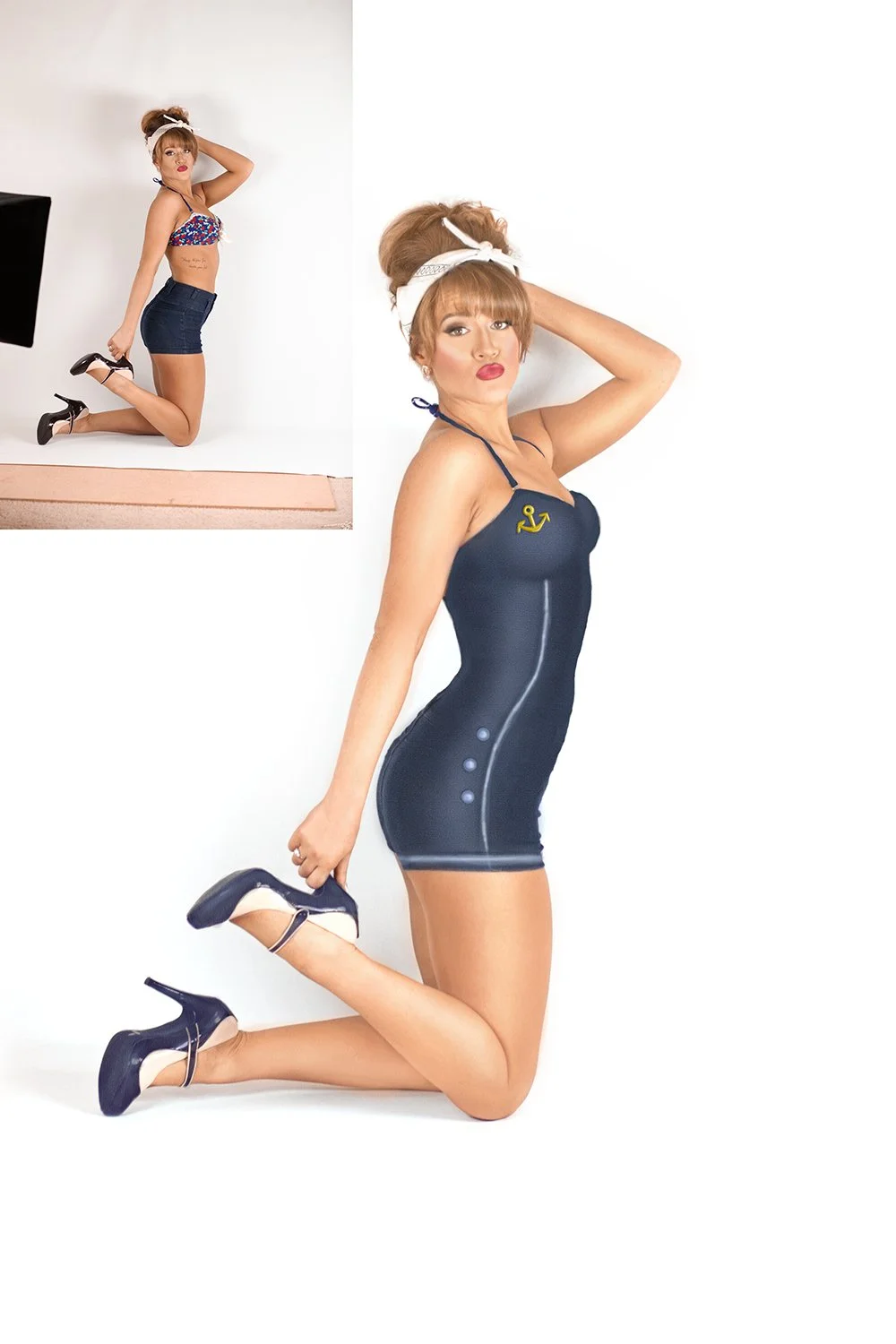
One of the questions women sometimes have about professional boudoir photography is how much editing happens after the photoshoot.
Will I still look like myself? Will my skin look overly smooth? Are you going to change my body? What happens to things like stretch marks, birthmarks or tattoos?
My approach to retouching is pretty simple: I want you to look polished, but I still want you to look like you.
Every photograph a client selects receives professional retouching. That includes high-end beauty airbrushing, enhancement of the existing highlights and shadows, artistic tonal adjustments and the basic finishing work that brings the photograph together.
What it doesn't automatically include is changing your body into something it isn't.
What Is Beauty Airbrushing?
Every image selected by a client receives high-end beauty airbrushing.
The goal isn't to blur the skin until all of its natural texture disappears. I soften and refine the skin while retaining its natural texture so the finished photograph still looks like a real person rather than overly processed skin.
There is a big difference between professionally retouched skin and skin that has simply been blurred smooth.
I want the photograph to have a polished finish while still allowing you to recognize yourself in it.
Do You Change a Client's Body?
Not as part of my standard retouching.
I use the highlights and shadows that are already present in the photograph to contour and enhance the body rather than automatically manipulating its actual shape.
Strategically working with shadows can sculpt and define certain areas of the body without digitally changing the client's proportions.
This actually begins before retouching. Posing, lighting and camera angle all affect how the body photographs. During your session, I guide you through those details rather than relying on Photoshop afterward to create the photograph.
If you're curious about that part of the process, I explain exactly how I work with clients in my boudoir posing guide.
Retouching Isn't Just About Skin
Professional retouching goes beyond airbrushing.
I work with the highlights and shadows already present in the skin, hair and eyes to add dimension and enhance what was captured in camera.
I also make artistic tonal adjustments along with the basic adjustments necessary to finish the photograph.
All of those individual changes work together. Ideally, you shouldn't look at a finished portrait and immediately think about the editing. You should simply see a polished photograph of yourself.
Is Pinup Photography Retouched Differently?
Yes. My pinup portraits have a more stylized finish than my contemporary boudoir photographs.
My pinup photography is inspired by vintage pinup illustrations and posters, so the finished images receive additional artistic editing to create that more polished, painterly look. The goal is intentionally different from my standard boudoir retouching—the photograph is being styled to feel more like a vintage pinup illustration or poster while still retaining the client's likeness.
If you'd like to see more examples of that style, you can explore my pinup photography.
Do You Remove Stretch Marks?
I can, but I don't automatically assume that you want them removed.
Stretch marks can be removed at your request and at no additional charge.
The same applies to birthmarks.
I think that's an important distinction because something one woman wants removed may be something another woman considers part of herself and wants to keep.
Rather than making that decision for you, I leave those changes up to you.
Can Tattoos Be Removed From Boudoir Photos?
Yes.
If you have a tattoo you don't want visible in your finished photographs, I offer complimentary tattoo removal by request.
Again, I don't automatically remove tattoos. They're part of many women's appearance and personal stories, so unless you tell me otherwise, they stay.
If you would prefer one removed from your selected photographs, that's something I can take care of during retouching.
Do You Offer Body Sculpting?
Yes, but subtle body sculpting is by request.
My standard approach is to use posing, lighting, camera angles and the natural highlights and shadows in the photograph to flatter the body without digitally changing its shape.
If there is something you would like subtly adjusted afterward, however, you can ask.
The key word for me is subtle. My goal isn't to turn you into a different person.
Will I Still Look Like Myself?
Yes—and that's important to me.
Professional retouching should enhance a portrait without erasing the person in it.
Your skin should still have texture. Your body shouldn't automatically be reshaped. Your tattoos, birthmarks and stretch marks aren't treated as flaws that I assume need to disappear.
At the same time, these are your photographs. If there's something you would feel more comfortable having removed or subtly adjusted, you have that option.
It's a balance between creating the polished, professionally finished portraits my clients expect and making sure the woman looking back at you is still recognizably you.
When Does Retouching Happen?
After your photoshoot, you'll see your images and select the photographs you want to keep. Every image you select receives professional retouching.
That means I'm not applying detailed beauty retouching to a photograph you've never chosen. The images that become part of your final collection are the ones that receive the finished treatment.
If you're wondering what happens during the rest of the photoshoot—from professional hair and makeup through guided posing and selecting your photographs—you can learn more about the boudoir experience at Bella Chic Photography.
Professional Retouching Without Losing What Makes You You
I've spent years developing the way I photograph and retouch women, and the two processes work together. Good posing, professional lighting and thoughtful camera angles give me a strong photograph to begin with. Retouching allows me to carefully finish what's already there.
My goal isn't to create a different version of you. It's to give you a beautifully finished portrait that still looks and feels like the woman I photographed.